
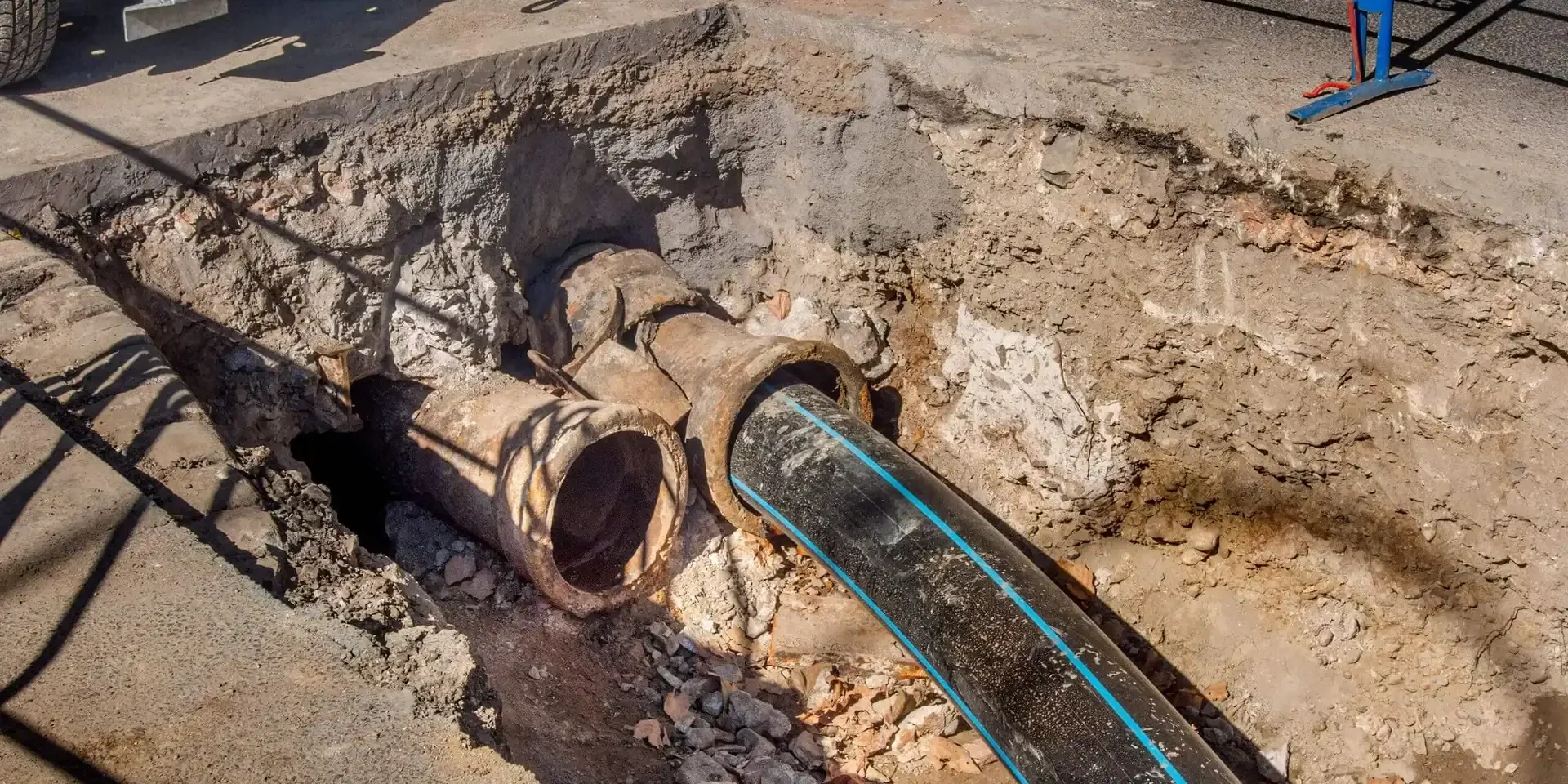
If your sewer line needs repair, the first image that probably comes to mind is a backhoe parked in your front yard, a trench running from the house to the street, and weeks of putting your property back together after the pipe is fixed. For a long time, that was the only way it got done.
It is still one way. But it is no longer the only way, and for many types of sewer damage, it may no longer be the best way either.
Trenchless sewer repair has changed how plumbers approach damaged pipes, and it has given homeowners an option that most people do not even know exists until they are told their sewer line needs work.
The problem is that most homeowners are making this decision for the first time, with limited information, under the pressure of an active sewer problem.
By the time you finish reading this, you will understand exactly how each method works, where each one has the advantage, and which conditions determine whether trenchless or traditional repair is the right call for your property. That clarity is what keeps this decision from costing you more than it needs to.
How Traditional Sewer Repair Works
Traditional sewer repair is exactly what it sounds like. A trench is dug from the surface down to the depth of the damaged pipe, the damaged section is exposed, and the pipe is either repaired or replaced directly.
The method has been used for decades, and it works reliably. The plumber has full visual and physical access to the pipe, which means there are no limitations on what can be repaired. Collapsed pipes, severely misaligned sections, pipes that have lost their structural shape entirely, and damage that spans long stretches of the line can all be addressed through excavation.
The trade-off is the surface damage. The trench runs through whatever sits above the pipe: lawn, landscaping, garden beds, driveways, walkways, patios, or concrete. Once the pipe is fixed, the homeowner is left with a second project, restoring everything that was torn up to reach it. That restoration can take weeks and cost a significant amount on its own, separate from the plumbing bill.
How Trenchless Sewer Repair Works
Trenchless repair takes a different approach entirely. Instead of digging down to the pipe, the plumber works through the pipe using small access points.
The most common residential trenchless method is cured-in-place pipe lining, or CIPP. The process follows a clear sequence:
- The pipe goes through a thorough sewer cleaning, typically with hydro-jetting, to remove roots, debris, and buildup so the liner bonds properly
- A flexible liner coated in resin is inserted into the damaged sewer line through a small access point and positioned across the damaged section
- The liner is inflated against the interior walls of the old pipe, pressing the resin into every crack and gap
- The resin cures and hardens, forming a smooth, sealed new pipe inside the original one
The old pipe stays in the ground as an outer shell. The new liner seals cracks, bridges joint gaps, blocks root entry points, and restores the line’s full flow capacity.
For pipes that are too damaged for lining, pipe bursting offers another trenchless option. A new pipe is pulled through the old one, breaking the old pipe outward as the new one takes its place. This achieves a full replacement without a trench.
Most trenchless repairs are completed within a single day, and the property above the pipe remains undisturbed.
Where Traditional Repair Has the Advantage
There are situations where traditional excavation is the better choice, and knowing when that applies prevents you from pursuing a method that will not hold up.
A fully collapsed pipe cannot be lined because there is no intact structure for the liner to bond to. Severe misalignment, where pipe sections have shifted so far out of position that a liner cannot pass through, also requires excavation. And when the damage spans a very long section of the line or involves multiple points of failure across the system, traditional repair gives the plumber the access needed to address everything comprehensively.
Traditional repair also makes sense when the pipe runs under an area that is already scheduled for construction or renovation. If the driveway is being replaced anyway, the surface disruption becomes a non-issue, and excavation offers the most direct path to the pipe.
Where Trenchless Repair Has the Advantage
For the majority of residential sewer line conditions that homeowners encounter, trenchless repair offers meaningful advantages that go beyond the pipe itself.
1. Minimal property disruption
Your lawn, landscaping, driveway, walkways, and mature trees stay intact. There is no trench running across the yard and no restoration project waiting for you after the plumbing work is done.
2. Faster completion
Most trenchless repairs are finished in a single day, compared to the multi-day timeline that traditional excavation and restoration typically require.
3. Lower total cost in many cases
While the plumbing cost of trenchless repair can be comparable to or slightly higher than traditional methods, the total cost is often lower because there is no excavation labor, no surface restoration, and no secondary contractors needed to rebuild what was torn up.
4. Durability
CIPP liners are smooth, jointless, and resistant to root intrusion and corrosion. The new interior surface is designed to last decades, and because it eliminates the joints and gaps that caused the original problem, the repaired section is often stronger than the pipe was when it was new.
How the Decision Gets Made
The choice between trenchless and traditional repair is determined by the condition of the pipe, and that condition is established through a sewer line inspection before any repair method is recommended.
A camera inspection involves feeding a high-definition camera through the sewer line to see the interior in real time. The footage reveals cracks, root intrusion, joint separation, corrosion, bellies, offsets, and collapse. It shows the plumber exactly what they are dealing with and whether the pipe has enough remaining structure to support a trenchless repair.
If the pipe qualifies for lining or bursting, trenchless is typically the recommended path because it achieves the repair with less disruption, less time, and often less total cost. If the damage exceeds what trenchless methods can address, traditional excavation becomes the necessary route, and the camera footage ensures that the decision is based on what the pipe actually shows rather than a guess from the surface.
Any plumber who recommends a repair method before running a camera through the line is making assumptions. The inspection comes first. Always.
Make the Decision That Fits Your Property and Your Pipe
Both methods fix the problem. The difference is what happens to your property during the process and how long it takes to get back to normal afterward.
Traditional repair gives a plumber full access to the pipe but comes with significant surface disruption. Trenchless repair works through the pipe itself, leaving the property above it untouched and completing the job in a fraction of the time.
The right choice depends on what the camera inspection reveals about your specific pipe. That footage is where the decision starts, and it is what ensures you get the method that actually fits the situation rather than the one that is easiest to default to.
At Birmingham Drain Cleaning and Sewer Repair, we offer both trenchless and traditional sewer line repair, and we always start with a camera inspection so the recommendation matches what the pipe actually needs. Our team has over 50 years of combined experience diagnosing and repairing sewer lines across Birmingham and the surrounding areas.
If your sewer line needs attention and you want to understand which repair method makes sense for your property, schedule a free estimate, and we will show you exactly what is going on inside the line before anything else happens.