
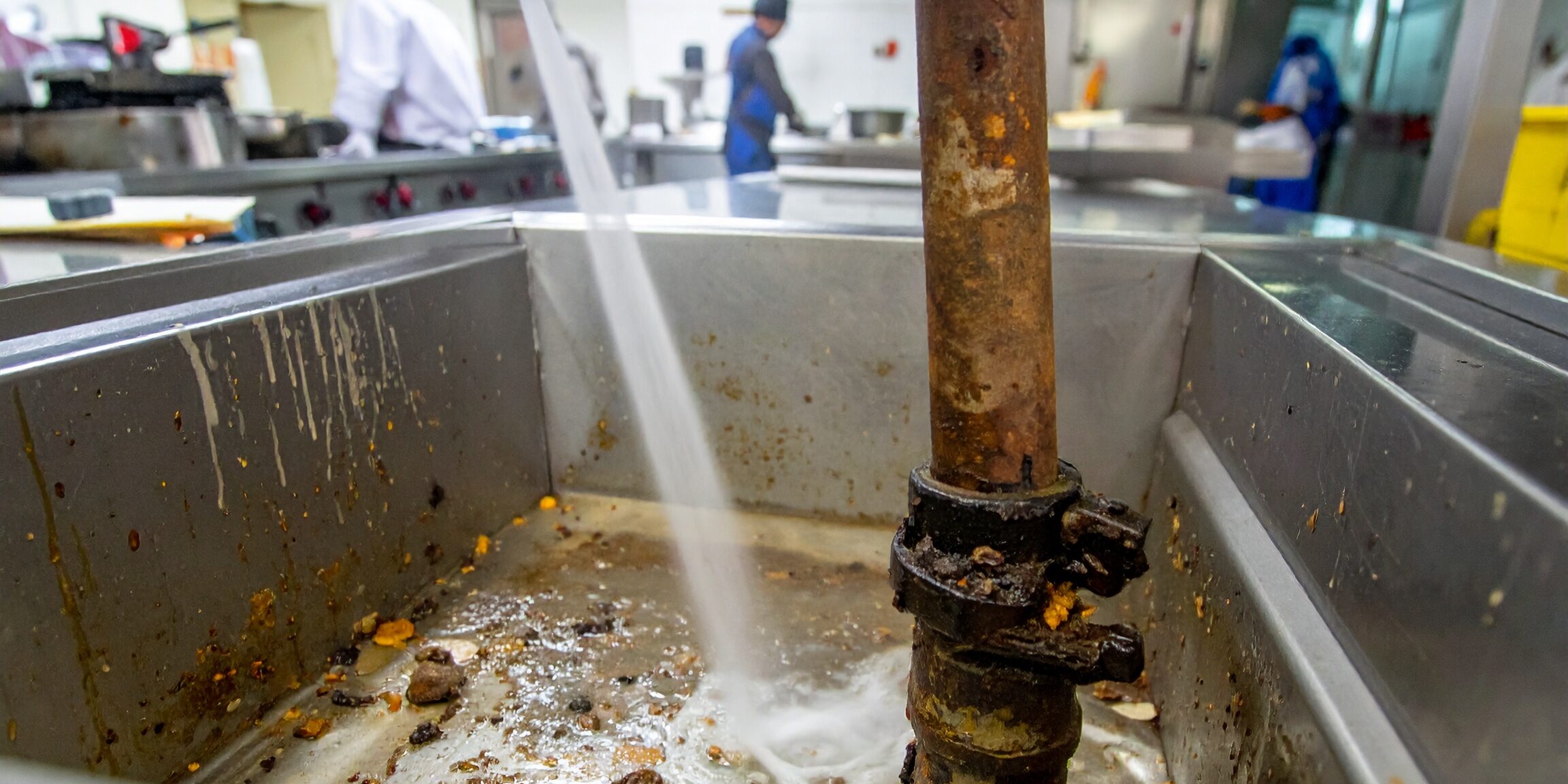
Nothing goes down a drain and simply disappears.
Every time grease, soap, or hard water flows through your plumbing system, a small amount is left behind. You never see it happen, and that is exactly what makes buildup so easy to overlook.
It starts with a thin layer that is almost impossible to notice. Then another. And another. Over months and years, those deposits begin to narrow the space inside your pipes, making it harder for water to flow and easier for drain problems to develop.
The challenge is that grease, soap, and mineral buildup do not affect your plumbing in the same way. Each leaves behind a different kind of residue, and each creates its own set of problems over time.
In this blog, you’ll learn how these common substances affect your drain and pipe system, why the buildup gets worse over time, and how regular drain cleaning helps prevent small deposits from becoming larger plumbing problems.
Grease: The Layer That Never Fully Washes Away
Grease is the most common cause of kitchen drain buildup, and it behaves differently inside the pipe than most homeowners expect.
When you pour grease down the drain, it’s warm and liquid, so it flows away with the water. But as it travels through the pipes and cools, it hardens and sticks to the pipe walls. The first layer is thin, but each new layer sticks to the last one.
Over time, grease builds into a thick, hardened coating that narrows the pipe from the inside. It does not dissolve on its own, and hot water does not remove it. Running hot water after cooking may push the grease further down the line, but it still solidifies once it cools. The clog just forms deeper in the system rather than at the fixture.
What Happens as It Progresses
In the early stages, grease buildup causes the kitchen drain to slow slightly. Water pools for a moment before clearing. Most homeowners adjust to this without thinking much about it.
As the coating thickens, the drain slows noticeably. Food particles and soap residue begin catching against the grease layer, accelerating the buildup. The pipe that started at full diameter may now be operating at half capacity or less, and every use adds to the restriction.
In advanced stages, the grease hardens to the point where standard drain cleaning methods like plunging or a hand snake can only punch a temporary hole through the center. The walls remain coated, and the clog reforms within days or weeks.
How to Address It
Professional hydro-jetting is the most effective method for removing hardened grease from pipe walls. The high-pressure water strips the buildup from the full interior surface and restores the pipe to its original diameter. For kitchens with ongoing grease exposure, annual or biannual drain cleaning keeps the accumulation from reaching the point where it restricts flow.
Soap: The Residue You Do Not See Building
Soap seems harmless because it’s made to clean. It might sound strange that it can leave residue in your pipes, but how soap reacts with your water can cause problems.
When traditional bar soap or certain liquid soaps meet hard water, the fatty acids in the soap react with the calcium and magnesium in the water. The result is soap scum, a sticky, insoluble film that coats whatever surface it touches, including the inside of your drain pipes.
Unlike grease, which is primarily a kitchen problem, soap scum accumulates in every drain that handles soapy water. Bathroom sinks, showers, bathtubs, and utility sinks all develop this buildup over time.
What Happens as It Progresses
At first, you can’t see soap scum building up inside the pipe. The drain works fine and nothing seems off. But the film is already sticking to the pipe and making it rough, which helps other debris get caught.
As the buildup grows, hair, dirt, and small particles stick to the soap scum layer. In bathroom drains, this combination of soap residue and hair is what produces the dense, stubborn clogs that resist plunging. The soap scum acts as the glue that holds the clog together.
Over time, the residue extends beyond the trap and into the branch line. The drain becomes chronically slow, and even after clearing, it returns to the same condition within weeks because the underlying film was never removed.
How to Address It
Enzymatic drain treatments can break down soap scum over time with regular use. For existing buildup that has hardened, professional cleaning with a snake or hydro-jetting removes the residue from the pipe walls. Switching to a soap formula that produces less scum, or using a water softener to reduce the mineral reaction, slows the rate of accumulation going forward.
Mineral Scale: The Buildup That Bonds to the Pipe
If grease coats and soap films, mineral scale bonds. It is the hardest of the three to remove and the most damaging to the pipe over the long term.
In areas with hard water, dissolved calcium and magnesium flow through the pipes with every gallon. As the water passes through, small amounts of these minerals deposit on the interior walls. Over time, the deposits harden into a rigid layer called scale that bonds directly to the pipe surface.
Scale doesn’t just make the pipe narrower. It also makes the inside rough for good. Pipes that used to let water and debris flow easily now have a rough, chalky surface that catches everything. Grease and soap scum stick more, and other debris builds up faster.
What Happens as It Progresses
In the early stages, scale is invisible and has no noticeable effect on flow. The minerals accumulate slowly, and the restriction builds over years rather than months.
As the scale layer thickens, water flow decreases across every fixture connected to the affected pipes. Drains slow. Water pressure may drop slightly if the supply lines are also affected. The pipe’s ability to self-clear through normal water flow diminishes because the interior surface has lost its smoothness.
In advanced cases, the scale layer can reduce a pipe’s effective diameter by 50 percent or more. At that point, clogs form from normal daily usage because the pipe simply cannot handle the volume it was designed for. Drain cleaning clears the blockage, but the scale remains and the next clog starts building immediately.
How to Address It
Hydro-jetting can remove moderate scale buildup. Severe calcification may require mechanical descaling or, in some cases, pipe replacement if the walls have thinned from years of mineral contact. A water softener installed at the home’s point of entry removes the minerals before they reach the pipes, which is the most effective long-term prevention.
How the Three Compound Each Other
Grease, soap, and mineral buildup do not operate in isolation. In most homes, all three are present to some degree, and they accelerate each other.
Mineral scale roughens the pipe surface, which gives grease and soap scum something to grip. Grease traps food particles and debris. Soap scum binds with hair and dirt. Each layer makes the next one stick faster and hold tighter.
A pipe dealing with only one of these substances builds up slowly. A pipe dealing with all three builds up significantly faster. This is why homes with hard water and heavy kitchen use tend to experience drain issues earlier and more frequently than homes with softer water and lighter fixture demand.
Maintenance Is the Only Thing That Resets the Clock
Grease, soap, and minerals keep entering your drains every day. Every meal, every shower, and every gallon of hard water adds to the buildup. The only way to stop things from getting worse is to clean out the buildup regularly before it causes bigger problems.
Professional drain & pipe cleaning on a scheduled basis keeps the system operating at a capacity that prevents clogs from forming under normal use. Whether that means annual or biannual depends on your water quality and usage patterns.
If your drains have been slowing down or you have noticed buildup on fixtures that suggests hard water, a plumber can evaluate the system and clean it properly.
Birmingham Drain Cleaning and Sewer Repair serves Birmingham and the surrounding areas with professional plumbing service and over 50 years of combined experience. Give us a call and let us take a look at what has been building inside your pipes.